



What you need to know before you go gluten-free?
I'll cover the what is gluten and where is it found, and the pro's and con's of going gluten-free
Finishing with tips for following a healthy gluten-free diet.
What you need to know before you go gluten-free?
Covering some of the myths about gluten, and some nutrition tips about a gluten free diet.
• Firstly – what is gluten and where do you find it?
• Then, some reasons for and against going onto a gluten-free diet.
• And finally, some of the options for following a healthy gluten-free diet.
What is gluten?
Gluten is the name given to a protein complex found in some grains. It is a composite name representing gliadin in wheat, hordein in barley, and secalin in rye.
Oats are in a grey area when it comes to being labelled gluten-free. The current laboratory tests can only measure gliadin, hordein and secalin - not avenin (the ‘gluten’ protein complex in oats) as it is a slightly different protein. Research has shown that approximately one in five people with coeliac disease reacts to pure, uncontaminated oats. Since the only way to determine a reaction is to assess gut damage is via invasive a gastroscopy/biopsy, the Australia New Zealand Food Standards Code, states “oats and their products are not permitted in foods that are labelled gluten free”.
So, in New Zealand anything containing wheat, barley, rye and oats are NOT gluten-free. Everything from breads to baked beans, breakfast cereals to tomato sauce, spice mixes to flavoured potato chips need to have their labels carefully scrutinised if you are avoiding gluten. Thankfully here in New Zealand our food laws means that if anything contains any of these gluten-containing grains in any way, shape or form it must state “contains gluten” clearly on the label (usually on the back near the ingredients list). Except for beer for some reason, no labels there that mention the presence of gluten, so beware the beer!
Why go gluten-free?
The most obvious reason is coeliac disease, which is an auto-immune disease where, in the presence of gluten the immune system gets confused and thinks that the cells of the small intestine are dangerous and must be destroyed.
That leads to damage and inflammation which causes all sorts of symptoms and other potential health issues.
Symptoms range from the obvious – tummy pain and diarrhoea, and fatigue; through to other symptoms such as easy bruising, ulcerations in the mouth and skin rashes. The symptoms of coeliac disease vary considerably which can make diagnosis tricky.
Health issues related with coeliac disease are anaemia (low iron levels) and osteoporosis (weakened bones) due to the damage in the gut reducing the body’s ability to absorb adequate amounts of iron and calcium.
Other reasons to go gluten-free may be due to an allergy, Irritable Bowel Disease (IBD) such as Crohn’s disease, or Irritable Bowel Syndrome (IBS). These conditions have been shown to benefit from a gluten-free diet in some people.
Three good reasons NOT to go on a gluten-free diet:
1. Your neighbour did and said it cured all their health problems – what works for one person doesn’t work for everyone when it comes to healthy eating.
2. The word on the street is that gluten is evil and everyone should be gluten-free – not true, some people tolerate gluten perfectly well; and whole grain gluten-containing cereals contain beneficial vitamins (especially the B’s), minerals (zinc and magnesium), and fibre.
3. You saw a ‘before’ and ‘after’ shot on Facebook where the friend of a friends aunty lost weight on a gluten-free diet – doesn’t mean it will make you lose weight.
If you suspect that gluten is something you should be avoiding, first get a coeliac disease test done. You MUST have the necessary tests done BEFORE you cut out gluten in order for the tests to be accurate. The test is for the effect of the presence of gluten, so no gluten = no response, which may mean a false negative result.
Tips on how to go gluten free.
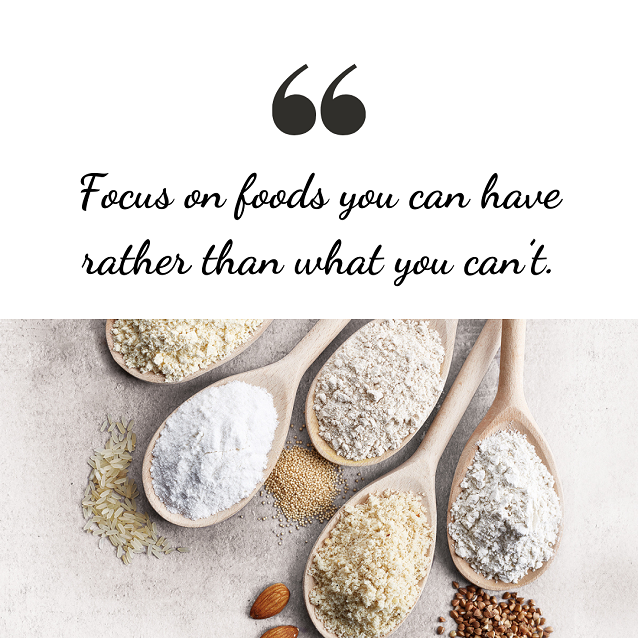
Focus on foods you can have, rather than what you can’t.
• You can eat anything that doesn’t contain wheat, barley, rye and oats. That means all fresh fruit, vegetables, milk products, eggs, gluten-free grains, legumes, nuts, seeds, seafood and meat.
• Read labels, and then read them again. And next time you buy the same thing just double check. Remember that anything that contains gluten has to state it on the label. However, it doesn’t have to state that it is gluten-free.
• Take care to avoid cross-contamination, e.g. crumbs from a shared toaster or in the butter. Sometimes it can be silly little things that you do on auto-pilot, like thickening the gravy or adding soy sauce. These can be issues in a kitchen where there are both gluten and gluten-free products on the shelves, so it is worth going totally gluten-free for everyone or having separate pantry shelves.
• Careful buying commercial gluten-free products, read the labels to check the sugar and fat. Gluten helps give texture to food products and also extends shelf-life – making for light and fluffy bread that stores well on the shelf. To replace the gluten in gluten-free products they can have added sugar and fat to help with texture.
• Another problem with commercial gluten-free products is the use of modified starch and fibre. Often one of the reasons people go gluten-free is to give their gut some love and help it heal, and too many of these types of ingredients can cause further aggravation.
• Go for lots of variety in the types of flours and gluten-free grains that you use in your diet. Aim for whole grain versions as much as possible. The more whole grains (and variety), the more nutrients. Some of the gluten-free grains are not technically grains (e.g. amaranth and buckwheat), but that is a whole other post.
Going gluten-free isn’t difficult.
Just remember to focus on what you can eat rather than what you can’t. Read the labels carefully. And one of the best ways to be safe from gluten is to cook your own food, fresh and from scratch; with lots of variety.
If you need some help to figure out how to best navigate a gluten-free diet - book a FREE, no obligation chat to see how I can help you out. ?